Heritage Vijayendra Nagar phase 2, telephone Nagar Main Road, Perungudi, Chennai 96

Below you will find who the operation suits, how it is done, what recovery is really like, the risks and trade-offs, and what affects the cost.

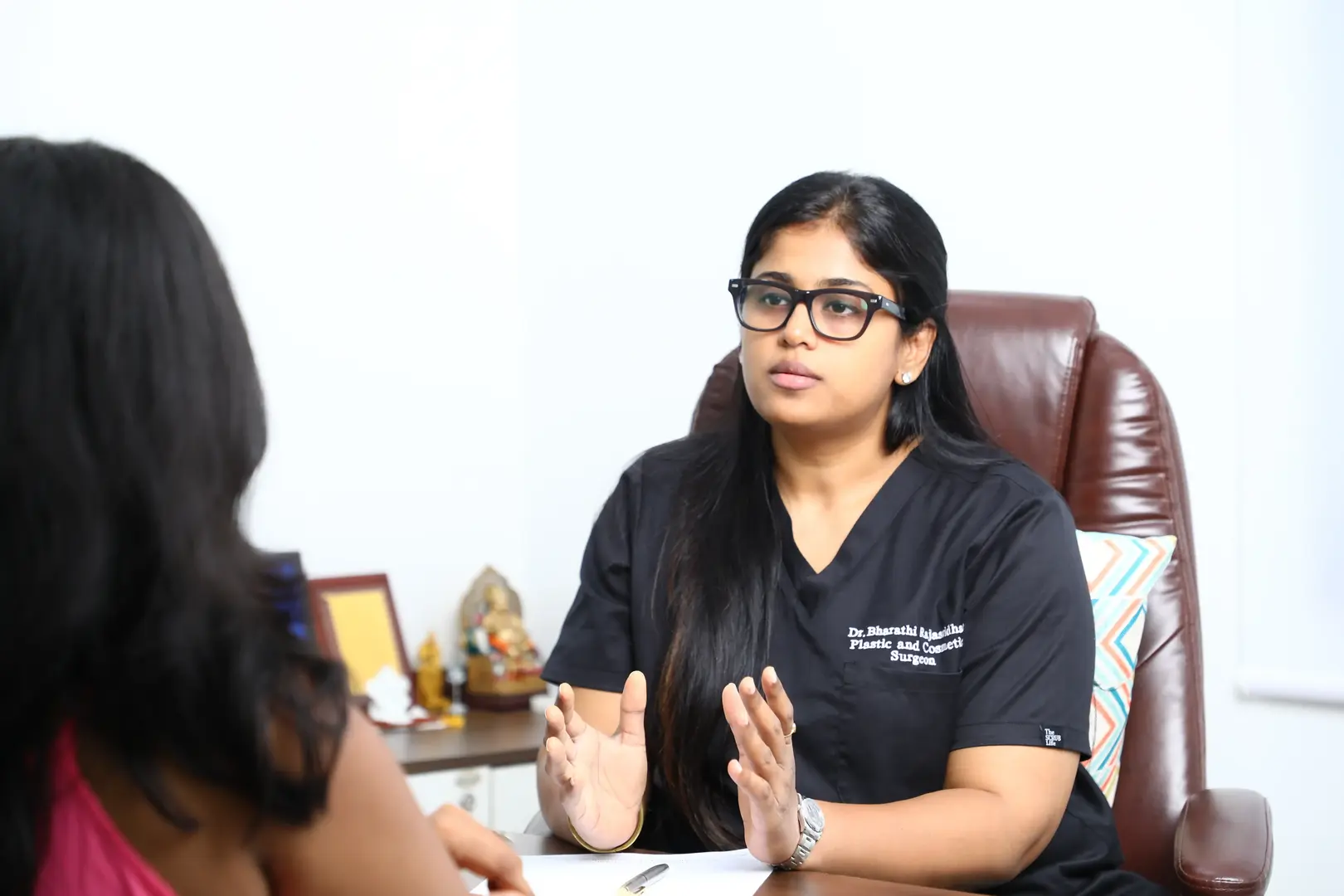
Dr. Bharathi Rajasridhar discussing breast reduction with a patient
Medically reviewed by Dr. Bharathi Rajasridhar, MS, MCh (Plastic & Reconstructive Surgery).
Last reviewed: July 2026

What is breast reduction surgery?

Breast reduction, medically called reduction mammoplasty, removes part of the breast's glandular tissue, fat and skin. The remaining breast is reshaped and lifted, and the nipple and areola are moved higher to suit the new breast. The areola can also be made smaller.

Because the breast is lifted as part of the operation, a reduction usually includes the effect of a breast lift. If your breast size is comfortable and your main concern is drooping, a breast lift may suit you better.

Who is breast reduction suitable for?

You may benefit from breast reduction if large, heavy breasts cause:

  • persistent neck, upper back or shoulder pain
  • deep grooves from bra straps
  • rashes, sweating or skin infections in the fold under the breasts
  • difficulty running, exercising or finding clothes and bras that fit
  • self-consciousness or unwanted attention that affects daily life
  • a noticeable difference in size between the two breasts

You are likely to be a good candidate if you are in good general health, do not smoke (or can stop well before surgery), and are close to a weight you can maintain. If you are planning to lose a lot of weight, it is often better to do so first, because breast size can change with weight.

Is there a right age?

Breast reduction is usually done once the breasts have stopped growing, typically in adulthood. In younger patients with severe symptoms, surgery may be considered earlier after careful assessment and with parental consent.

Pregnancy and breastfeeding plans

Breasts can grow during pregnancy, and breastfeeding may not be possible after a reduction. If you plan to have children, discuss this openly; some women choose to wait until their family is complete.

Options to try before surgery

Surgery is not the only answer. For some women these measures reduce symptoms enough:

  • a professional bra fitting, as many women wear the wrong size
  • weight loss, if you are above a healthy weight, which can reduce the fatty part of the breast
  • physiotherapy for posture and upper-back strength
  • good skin care for the fold under the breast

If these have not helped, a reduction is worth discussing.

How breast reduction is done

The operation is performed under general anaesthesia and usually takes about 2 to 4 hours, depending on the amount of tissue removed. Your anaesthesia and stay are confirmed at consultation.

Incision patterns

The right incision pattern depends on the amount of tissue to be removed and your skin elasticity:

Swipe horizontally to view full table →
Pattern Scar Placement Usually Suited To
Vertical ("lollipop") Around the areola and straight down to the breast fold Moderate reductions with reasonable skin quality
Wise pattern ("anchor") Around the areola, down to the fold, and along the fold Larger reductions or more skin excess

The nipple and areola usually stay attached to a section of breast tissue (a pedicle) that carries their blood and nerve supply. In very large reductions, the nipple may instead be removed and replaced as a graft (free nipple graft) to keep it safe; this means loss of nipple sensation and of the ability to breastfeed.

How much tissue is removed?

This varies widely. It depends on your current size, height and frame, your symptoms and the size you want to be. Dr. Bharathi calculates a plan for each breast at consultation and explains the reasoning.

Most women go down by several cup sizes, but a specific cup size cannot be guaranteed because bra sizing varies between brands.

All removed tissue may be sent for laboratory examination (histopathology) as a routine safety check.

Your consultation and preparation

  1. Detailed discussion: A detailed discussion of your symptoms, how long you have had them and what you have tried.
  2. Medical assessment: Medical history, medicines, smoking status, breast lumps and family history of breast cancer.
  3. Physical evaluation: Examination and measurements, including the distance from collarbone to nipple and the quality of your skin.
  4. Personalised surgical plan: A clear plan: incision pattern, likely size, scars, risks, recovery and cost.
  5. Pre-operative diagnostics: Pre-operative tests, which may include blood tests and breast imaging depending on your age and history.

Stop smoking well before surgery, arrange help at home for the first few days, and buy the supportive bra recommended to you.

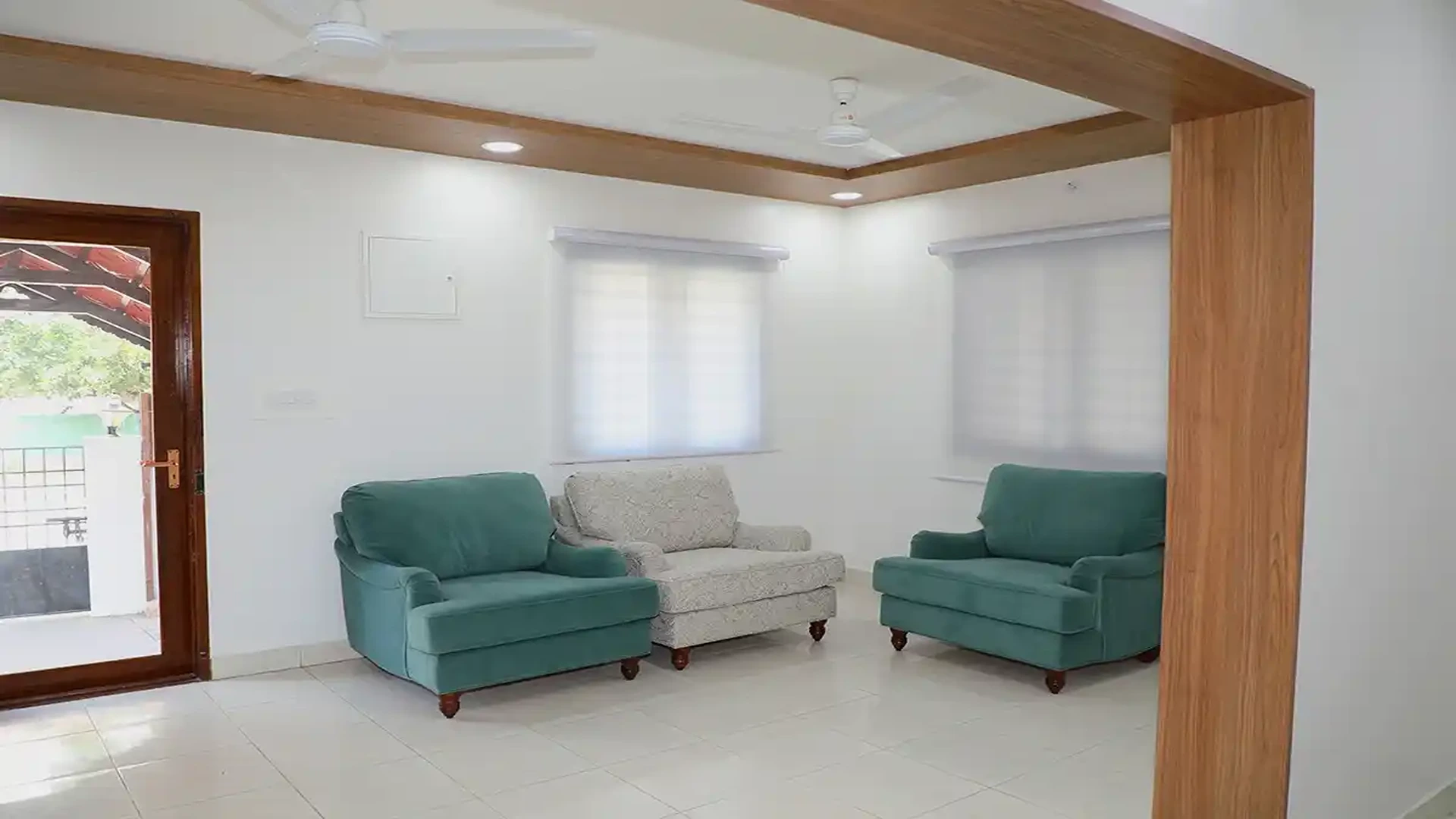
Reception at The Aesthetic Studio clinic, Perungudi, Chennai

Recovery timeline

Swipe horizontally to view full table →
Time After Surgery What to Expect & Clinical Milestones
First few days Soreness, tightness and swelling, controlled with prescribed pain relief. Drains, if used, are usually removed within the first week.
Weeks 1–2 Wound checks and dressing changes. Most people return to light desk work at 10 to 14 days.
Weeks 2–6 Wear the supportive bra day and night for about 6 weeks. No heavy lifting or strenuous exercise.
After 6 weeks Gradual return to exercise once cleared by your surgeon.
3–6 months Swelling settles and the final shape becomes clear.
12–18 months Scars continue to flatten and fade into fine lines.

Many women notice relief from the weight of their breasts soon after surgery, although it may take some weeks before you feel fully yourself.

Clinical Alert: Contact the clinic urgently if you have increasing pain or swelling on one side, fever, a wound that opens, or darkening of the nipple or skin.

Benefits and realistic expectations

Many women report less pain and better quality of life after breast reduction. Results are long-lasting, but:

  • Scars are permanent. They usually fade well but remain visible without clothing.
  • Breasts will continue to change with age, weight and pregnancy, and may droop over time.
  • Perfect symmetry is not possible.
  • Relief from back or neck pain is common but not guaranteed, because pain can have other causes.
Front-fastening supportive bra worn after breast reduction surgery

Risks and Complications

Your surgeon will explain how likely each of these is for you during detailed pre-operative planning:

Wound Healing & Scars

Risk of bleeding, haematoma, or delayed healing where scars meet. Thickened or widened scars can occur.

Sensation Changes

Temporary or permanent change in nipple or breast sensation, particularly with larger reductions.

Breastfeeding Function

Potential difficulty or inability to breastfeed. Techniques preserving the tissue pedicle give the best chance.

Tissue & Symmetry

Rare risk of nipple-areolar vascular compromise, fat necrosis (firm lumps), or minor contour asymmetry.

Risk factors: Smoking, diabetes, and higher BMI increase the risk of wound healing delays and are assessed prior to clearance.

Breast reduction compared with a breast lift

Both operations reshape and uplift the breasts, but their aims and methods differ significantly:

Swipe horizontally to view full table →
Feature Breast Reduction Breast Lift (Mastopexy)
Main aim Smaller, lighter, proportioned breasts Higher, firmer breasts at similar size
Relieves physical pain/strain High (addresses neck, back & shoulder pain) Minimal (primarily treats ptosis / drooping)
Tissue removed Glandular tissue, fat and excess skin Mainly excess skin & reshaping gland

Read more about breast lift surgery.

Cost of breast reduction surgery in Chennai

At The Aesthetic Studio, breast reduction currently starts from ₹1,50,000 for straightforward cases. This covers the surgeon's fee, standard operating facility charges, routine anaesthesia and initial follow-up visits. Larger or more complex reductions are quoted individually after examination.

The final cost depends on:

  • the amount of tissue to be removed and the technique
  • operating time and anaesthesia
  • whether an overnight stay is needed
  • laboratory examination of removed tissue, garments and follow-up

Is breast reduction covered by insurance?

Cover in India depends on your insurer and policy. When a reduction is done to relieve documented physical symptoms, some insurers consider a claim. A clinical letter describing your symptoms and examination findings can be provided after consultation, but approval rests with the insurer.

Dr. Bharathi Rajasridhar discussing breast reduction with a patient

Why Patients Consider The Aesthetic Studio

  • One surgeon throughout. Dr. Bharathi Rajasridhar sees you at consultation, performs the operation herself and reviews you at every follow-up.
  • Plastic surgery training. MS (General Surgery) and MCh (Plastic & Reconstructive Surgery) from Madras Medical College, with more than 19 years of clinical experience.
  • Symptom-focused planning. The size of the reduction is based on your symptoms, frame and goals, and the reasoning is explained to you.
  • Honest recovery guidance. You know before surgery what weeks 1, 6 and 12 will feel like.
  • A private setting with a female surgeon, by appointment only, at Perungudi on OMR, with consultation appointments at Poes Garden and Chetpet.

Expertise, Credentials & Patient-Centred Care

At The Aesthetic Studio, our clinical standard is rooted in formal plastic and reconstructive surgical qualifications. Patients receive unhurried, clear medical advice regarding breast procedures, with transparent discussion of anatomy, surgical limitations, and aftercare.

Formal MCh Training

Super-speciality surgical degree in Plastic & Reconstructive Surgery from Madras Medical College.

19+ Years Clinical Practice

Extensive operative background in cosmetic, reconstructive, and revision breast surgery.

Recognised Associations

Active member of APSI and TANPAPS upholding strict ethical and surgical guidelines.

Frequently Asked Questions


Will breast reduction relieve my back and neck pain? +
Many women report clear relief, especially when pain is caused by breast weight. Pain from other causes, such as spinal problems, may not improve, so your surgeon will ask about your symptoms in detail.
What scars will I have? +
Either a lollipop scar (around the areola and down to the fold) or an anchor scar (which also runs along the fold). They are placed to sit under a bra or swimwear and usually fade over 12 to 18 months, but they are permanent.
Will I lose nipple sensation? +
Sensation often changes for a few months. Most women regain much of it, but permanent change is possible, especially after larger reductions.
Can I breastfeed after a breast reduction? +
Some women can, but many cannot breastfeed fully. Techniques that keep the nipple attached to breast tissue give the best chance. Discuss your plans before surgery.
How long is recovery? +
Most people return to desk work in 10 to 14 days and to exercise after about 6 weeks. The final shape is clear at 3 to 6 months.
How many cup sizes smaller will I be? +
Most women go down several cup sizes, but the change is planned around your frame and symptoms rather than a cup size, which varies between brands.
Can teenagers have breast reduction? +
It is usually delayed until breast growth has finished. Earlier surgery may be considered for severe symptoms after careful assessment and with parental consent.
Is breast reduction covered by health insurance? +
It depends on your policy. Clinical documentation can support a claim where the reduction is for physical symptoms; the decision is your insurer's.
What is gigantomastia? +
Very large breasts, often with more than 1.5 kg of tissue per breast. Reduction in these cases may need a free nipple graft to keep the nipple safe.
Can my breasts grow back after reduction? +
The removed tissue does not grow back, but the remaining breast can enlarge with weight gain, pregnancy or hormonal change.
What happens at follow-up? +
Usually a review within the first week, at about 2 weeks for wound checks, at 6 weeks before returning to exercise, and at 3 to 6 months to assess the result and scars.

Related Breast Procedures

Explore comprehensive surgical and reconstructive options tailored for comfort, balance, and aesthetic refinement.

Arrange a consultation

If heavy breasts are affecting your comfort or daily life, a private consultation with Dr. Bharathi Rajasridhar will help you understand whether a reduction is right for you, what size is realistic, and what recovery will involve. You will receive a written estimate and there is no obligation to proceed.

© Aesthetic Studio. All Rights Reserved. | Last Reviewed: July 2026 | Designed & Developed by Swiflare Ai Innovations